Tennis players make up a huge share of pickleball's new-player pipeline, and it's easy to see why once you compare the two games directly: pickleball keeps a lot of what tennis players already know how to do, while removing some of what makes tennis hardest to pick up as an adult.
SMALLER COURT, SOLID PADDLE
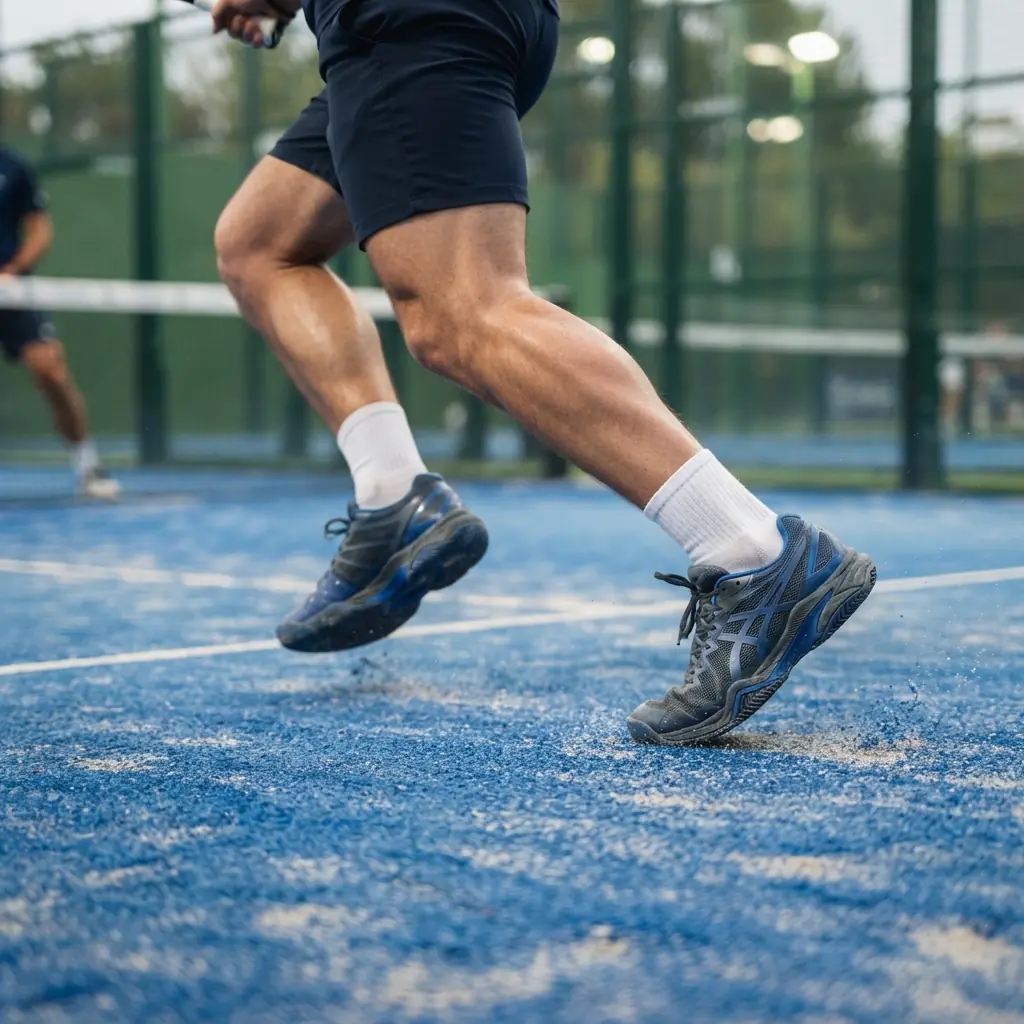
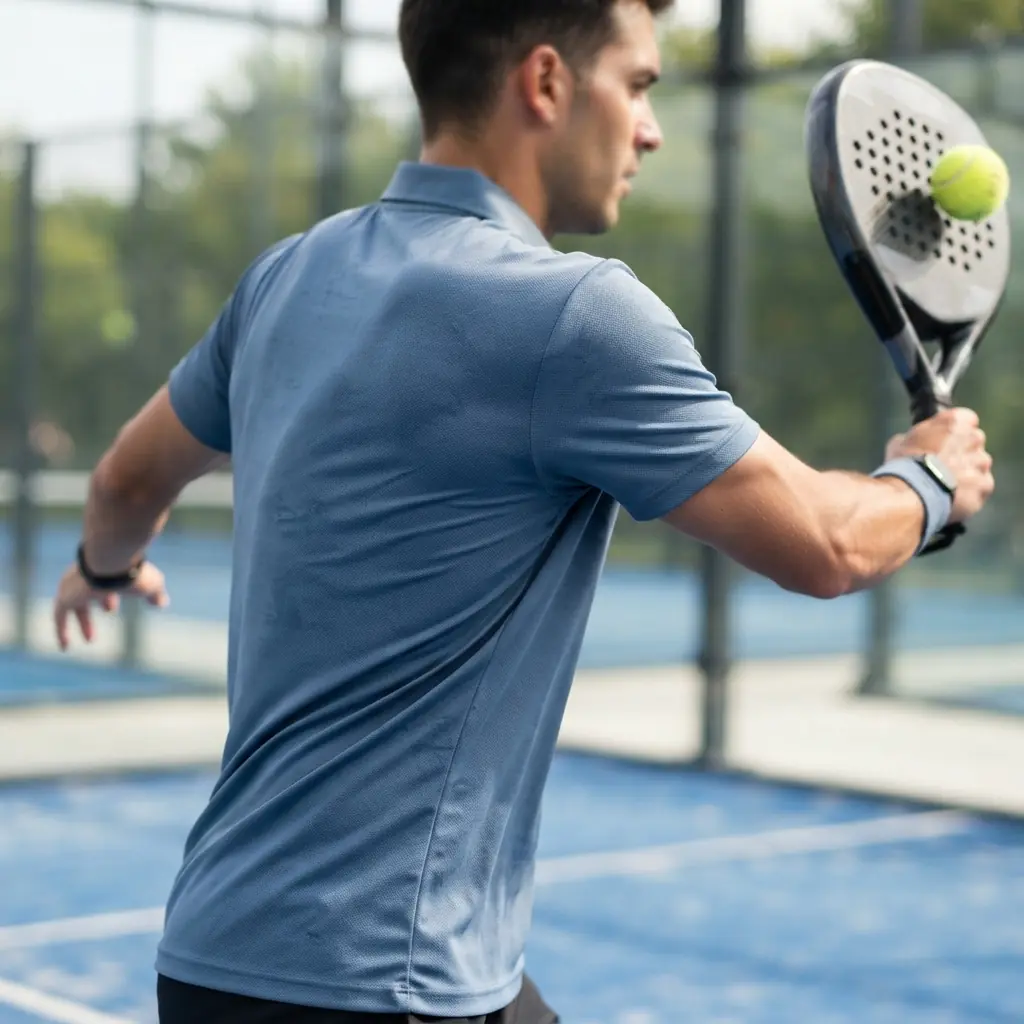
LARGER COURT, MORE RUNNING
Court Size & Format
A pickleball court measures 20 by 44 feet — see our court dimensions guide for the full layout — while a tennis doubles court measures 36 by 78 feet, more than double the total area. That size difference is the single biggest structural reason pickleball feels immediately more approachable: there's simply less court to cover between shots. Both sports can be played singles or doubles, though pickleball is more commonly played as doubles at the recreational level.
Equipment: Solid Paddle vs Strung Racket
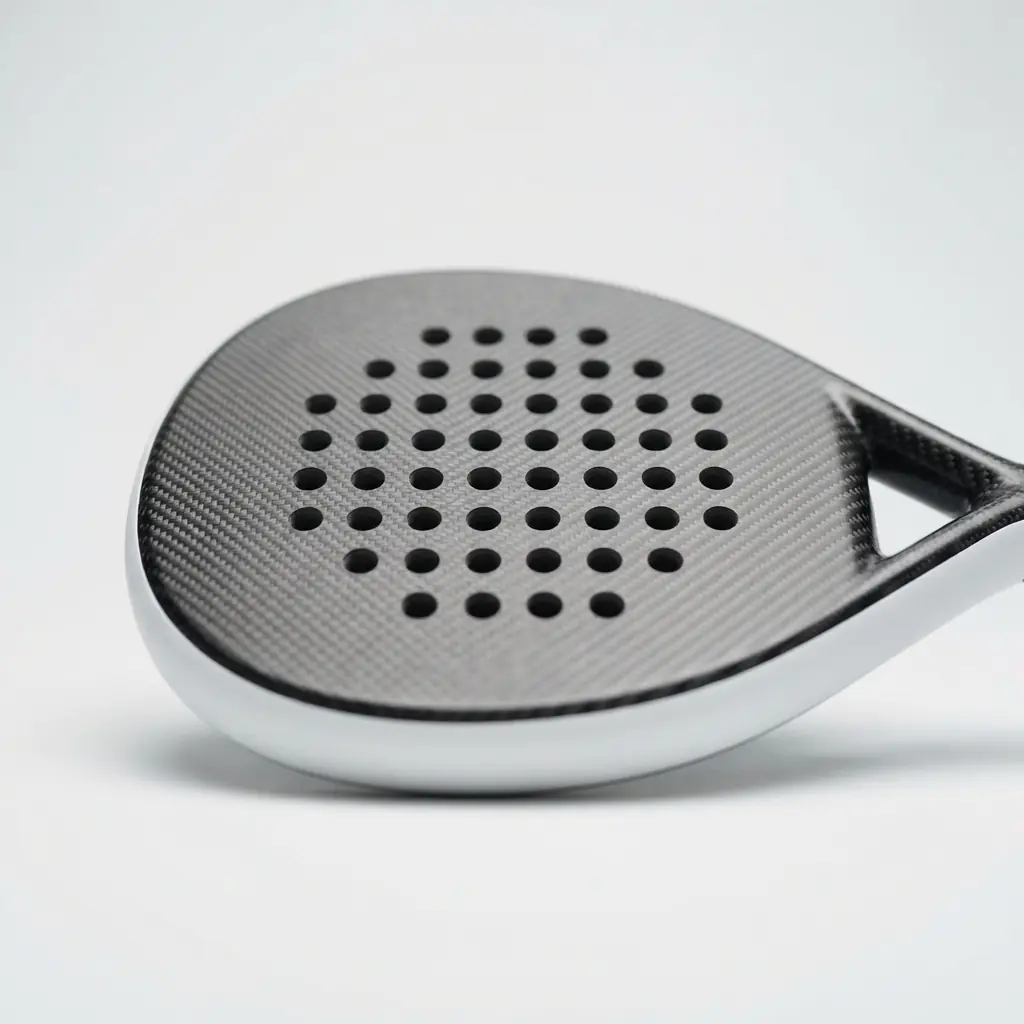
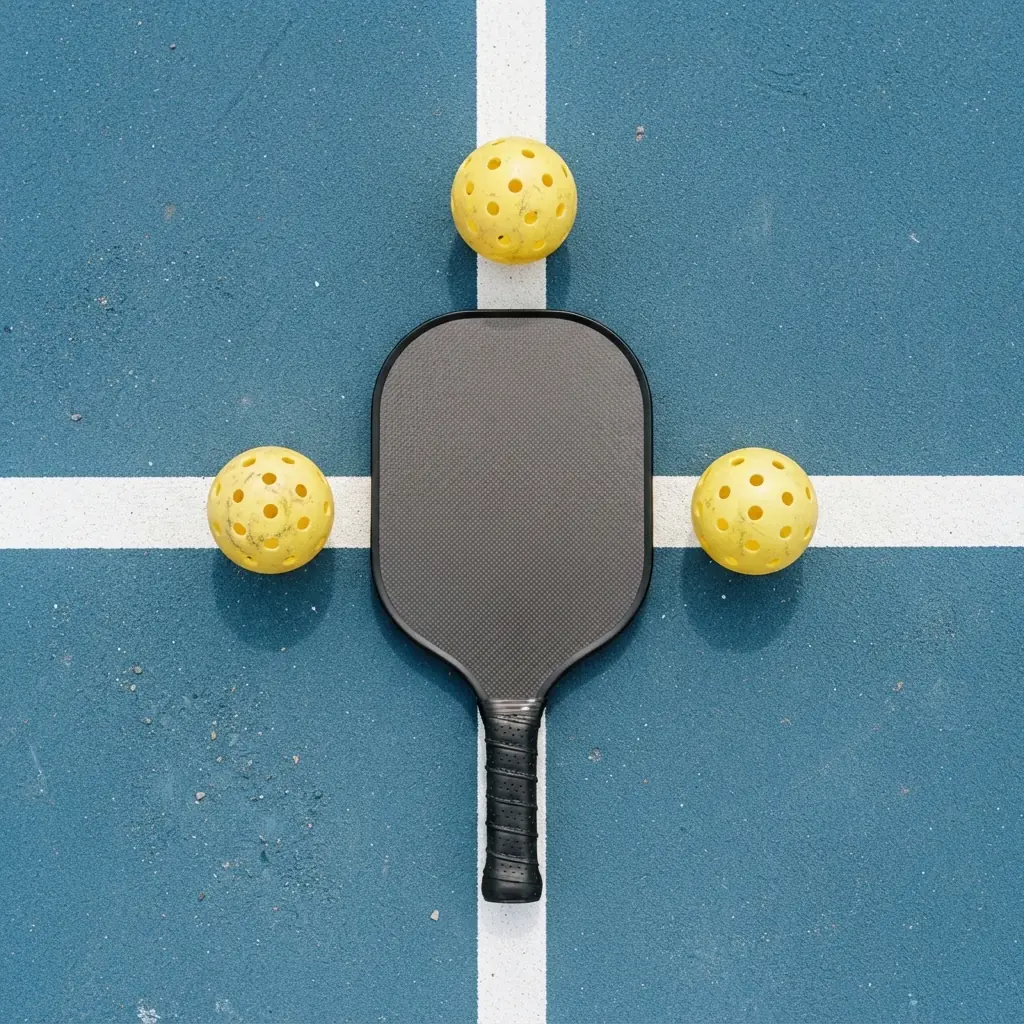
Pickleball paddles are solid and stringless, typically built with a polymer honeycomb core under a carbon fiber or fiberglass face — see our carbon fiber vs fiberglass breakdown for how that face material changes feel. Tennis rackets use a strung, open-frame head, which behaves completely differently on contact: the strings flex and add their own energy return, something a solid paddle face doesn't do. The ball differs just as much — pickleball uses a lightweight, hard perforated plastic ball, closer to a wiffle ball, while tennis uses a pressurized, felt-covered rubber ball built for a strung racket. Neither piece of equipment is a substitute for the other.
Scoring: A Genuinely Different System
This is where the two sports diverge completely rather than just varying in degree. Tennis uses a point-game-set structure (15/30/40/game, then sets to six games). Pickleball uses rally-adjacent scoring where only the serving side scores points, games are typically played to 11 (win by 2), and the serve rotates through both partners on a team before switching sides — see our pickleball rules explainer for the full breakdown. A tennis player's first few pickleball games usually involve more confusion about the score-calling sequence than anything happening on the actual court.
Tennis players adapt to pickleball's court size almost instantly — the scoring system is what actually takes a few real games to stop having to think about.
Physical Demand
Tennis generally demands significantly more running and sustained aerobic output, a direct function of its much larger court and longer average rally distances. Pickleball's smaller footprint and the non-volley zone at the net shift the physical demand toward quick reflexes, soft-hands control, and short, explosive lateral movement rather than sustained distance covered. Neither is objectively easier on the body — tennis asks more of your legs and cardiovascular system over a match, pickleball asks more of your hands, reflexes and ability to stay patient at the net.
Why So Many Tennis Players Pick Up Pickleball
Pickleball keeps the volleys, touch shots and competitive doubles culture that tennis players already enjoy, while cutting the court-coverage demands and the years of stroke development tennis requires to play at a satisfying level. It's also a genuinely social sport at the recreational level — open-play sessions and mixed-skill doubles are the norm, not a niche format. US participation reflects this pipeline directly: pickleball participation has grown roughly 479% since 2020, reaching an estimated 24 million US players in 2025 and trending toward a projected 28 million by the end of 2026, a growth curve tennis's larger, longer-established base simply isn't matching in percentage terms.
ProLite Rebel PowerSpin 2.0
~$110–160Reactive fiberglass face, forgiving sweet spot — a sensible first paddle for a tennis player trying pickleball
Which Should You Play?
If you already play tennis and love the sport's technical depth and singles-court battles, there's no reason to give it up — pickleball works well as a social, lower-barrier addition rather than a replacement. If you're newer to racket sports, or tennis's learning curve and court-coverage demands have been a barrier, pickleball is a faster, more social way into the same general skill set. Our beginner gear guide covers exactly what a first-time setup should look like.
Frequently Asked Questions
What is the main difference between pickleball and tennis?
Pickleball is played on a much smaller court (20x44 ft vs tennis's 36x78 ft doubles court) with a solid, stringless paddle and a perforated plastic ball, instead of a strung racket and a felt-covered rubber ball.
Is pickleball or tennis more physically demanding?
Tennis generally demands more running and sustained aerobic output, given its much larger court. Pickleball's smaller court means less overall distance covered, but it rewards quick reflexes and soft-hands control at the net.
Can I use a tennis racket to play pickleball?
No. Pickleball paddles are solid and stringless, built for a different, lighter plastic ball — a strung tennis racket isn't legal equipment and wouldn't play the same anyway.
Is pickleball easier to learn than tennis?
Most players find the basics of pickleball faster to pick up — the smaller court and simpler serve mechanics remove some of tennis's steepest early learning curve, though pickleball's non-volley zone rules and dinking game take real time to master too.