Padel and tennis share a family tree, a scoring system, and enough surface-level similarity that people who've never played either assume they're basically the same sport with a different racket. They're not. The equipment, the serve, the court, and even how a rally ends are genuinely different games built around different skills.
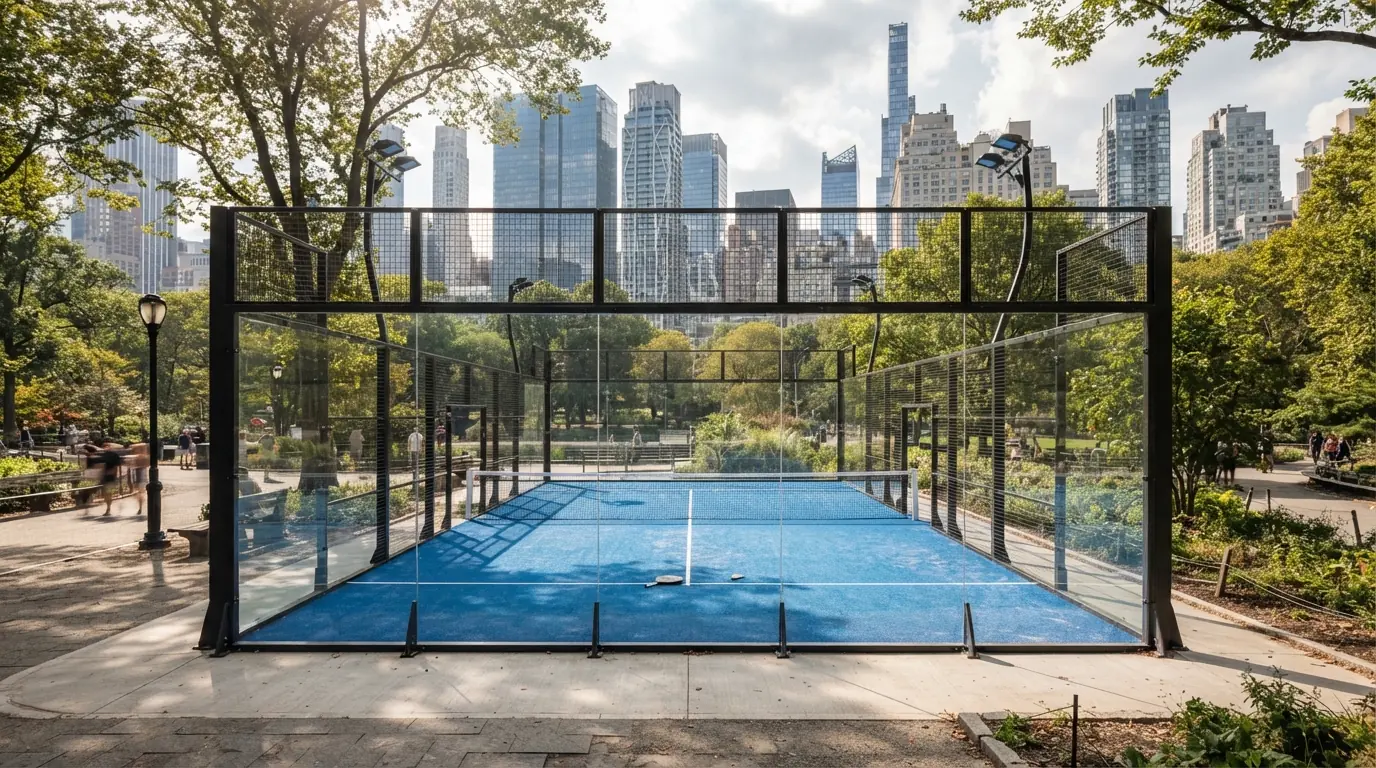
ENCLOSED, WALLED COURT
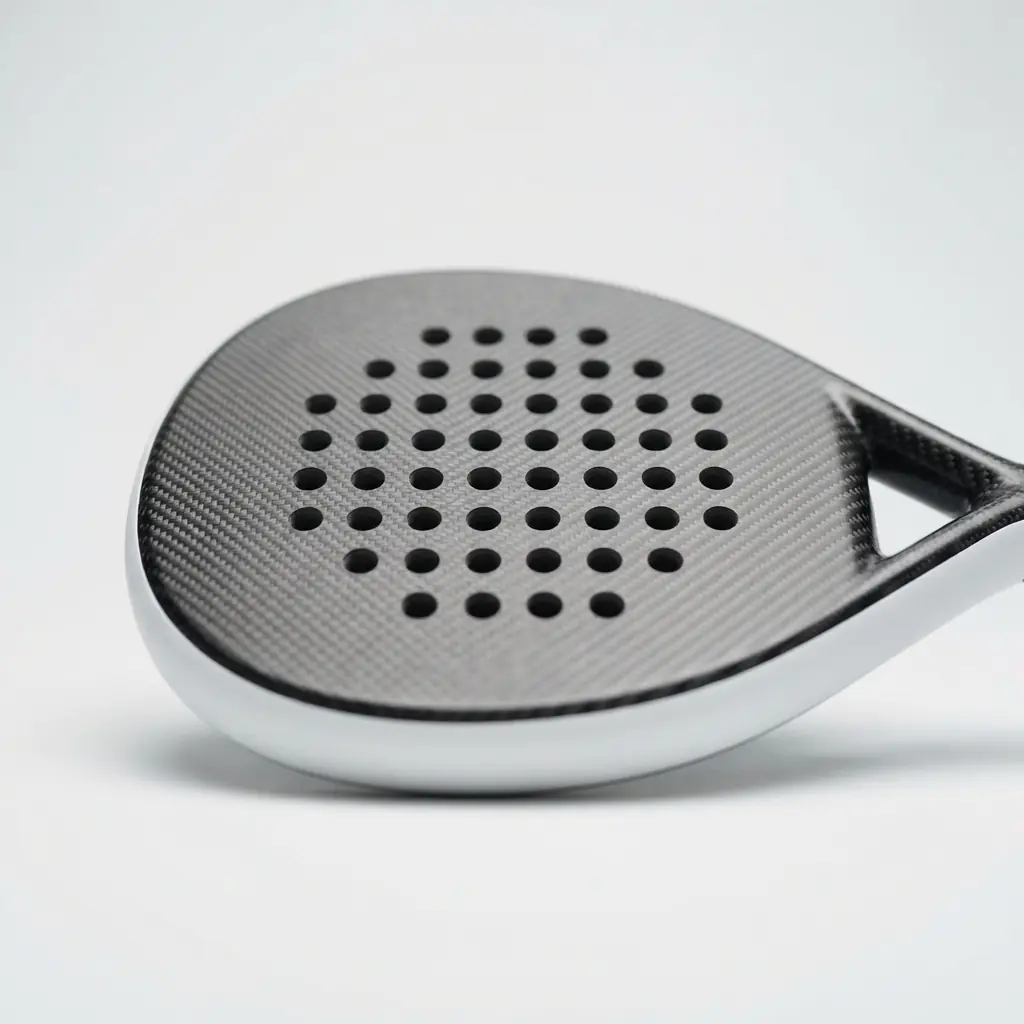
SOLID, STRINGLESS RACKET
Court Size & the Walls
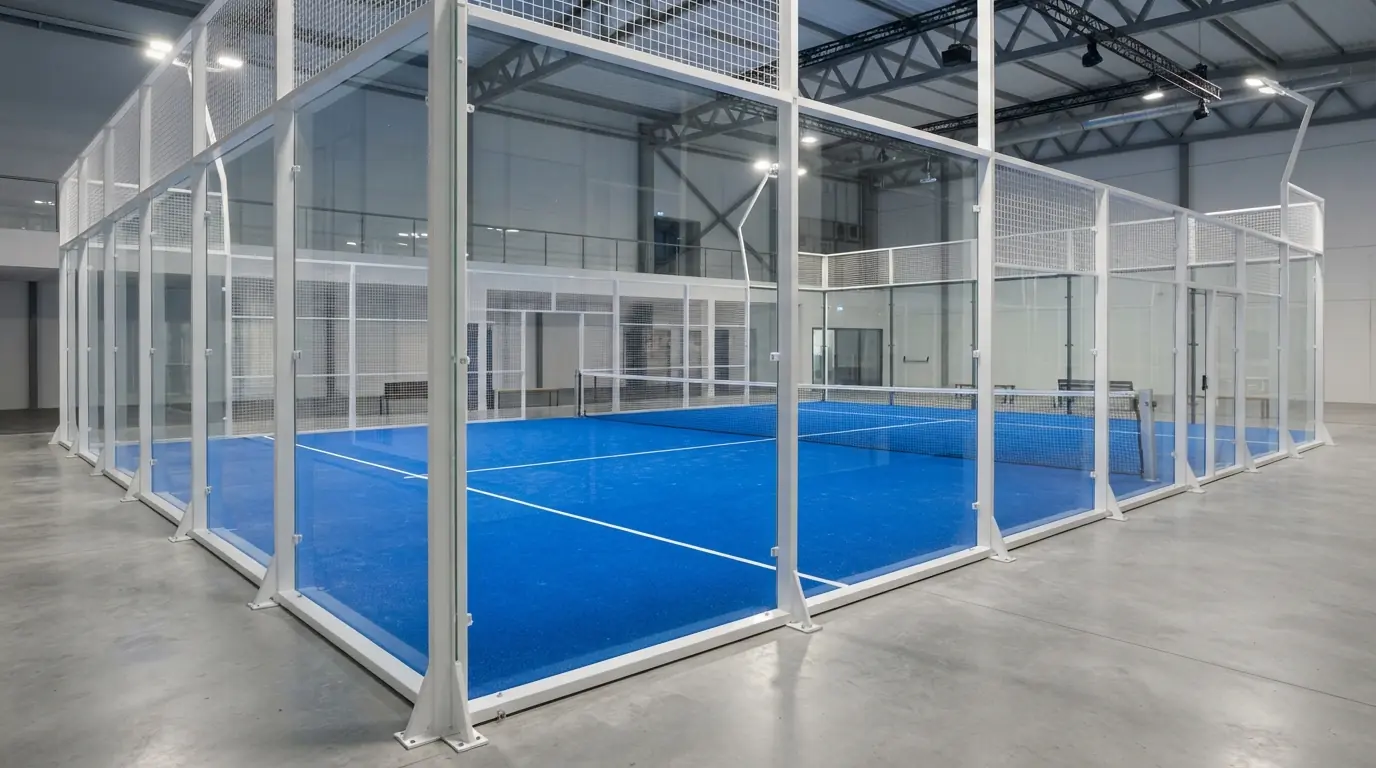
A regulation padel court measures 20 meters by 10 meters (65.6 x 32.8 ft) — almost exactly the footprint of a tennis singles court (78 x 27 ft), and noticeably smaller than a tennis doubles court (78 x 36 ft). The real difference isn't the raw square footage, though — it's that a padel court is fully enclosed, with walls that stay in live play. Regulation courts run 3 meters of tempered glass at the side walls, with the back wall reaching a taller 4-meter enclosure once topped with mesh fencing. A tennis court has no walls in play at all: anything a player can't reach is simply out of the point.
Racket, Ball & Serve
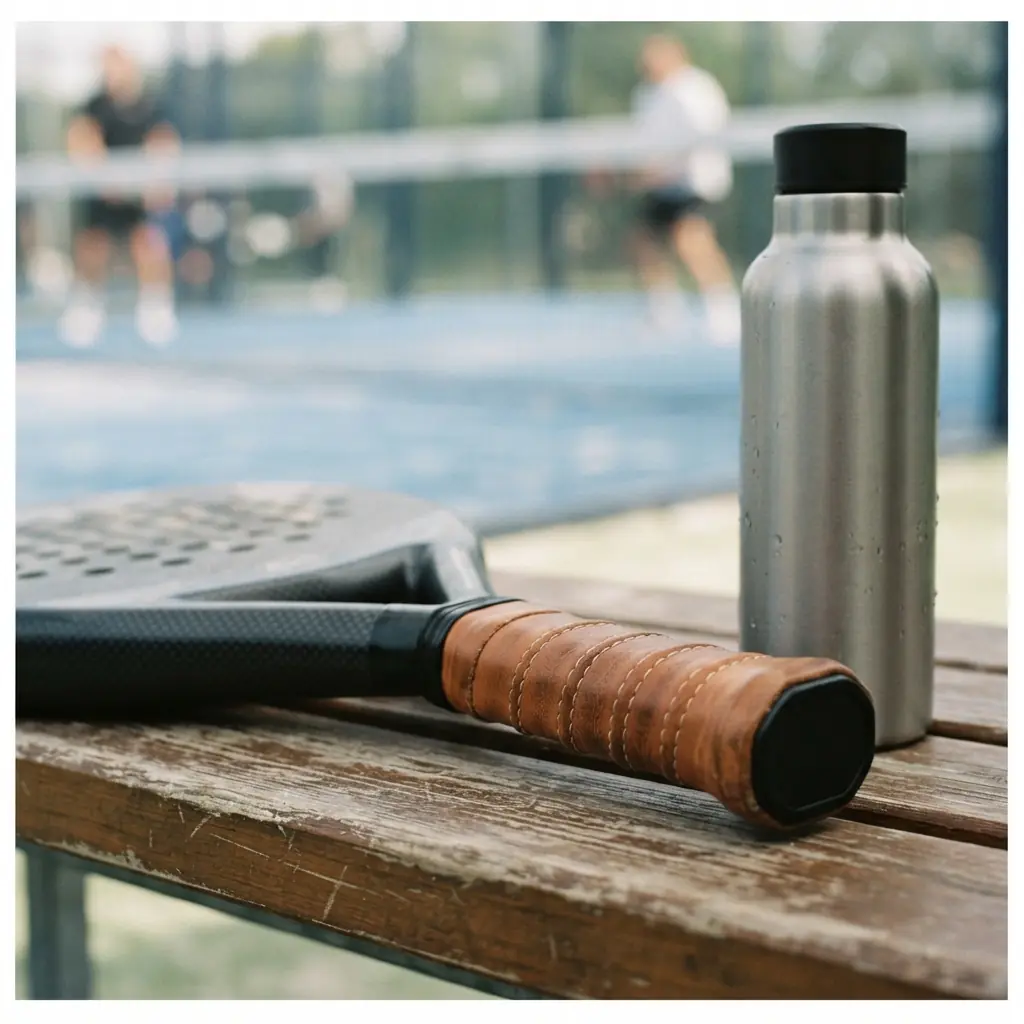
Padel rackets are solid, stringless and perforated, built around a foam core rather than a strung, open-frame head like a tennis racket. Padel balls are pressurized and similar in size to a tennis ball, but with slightly lower internal pressure and a shorter-napped felt, matched to a solid racket instead of a strung one.
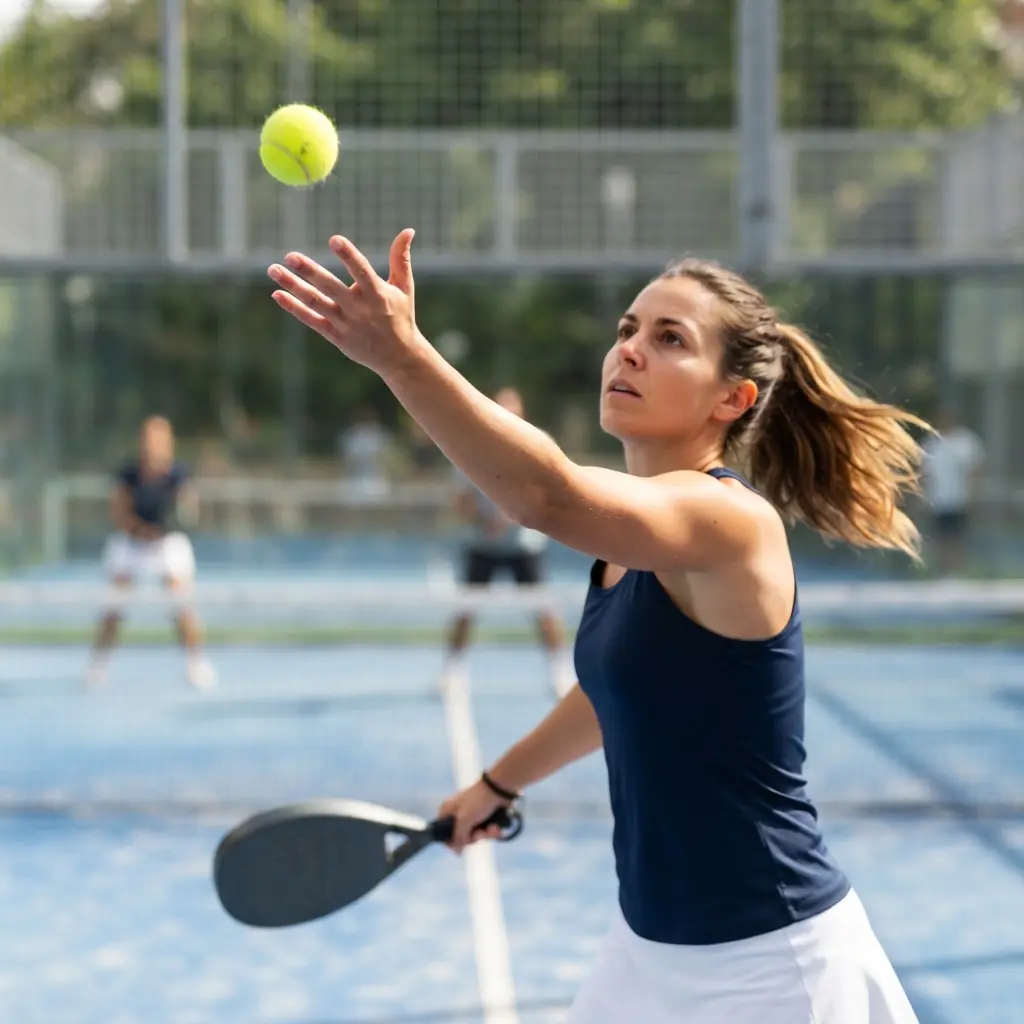
The serve is the clearest rule difference for anyone coming from tennis: padel's serve is always underarm, struck at or below hip height, with the ball bounced once on the ground first. Tennis allows a full overhead serve — the single biggest swing generator in the sport, and the shot most tennis players instinctively reach for and can't use the first time they step onto a padel court.
Babolat Contact Padel Racket
~$59Round shape, soft core, huge forgiving sweet spot — a sensible first racket for a tennis player trying padel
Scoring: Where the Two Sports Overlap
This is genuinely the one place the two sports line up closely. Both use the same 15, 30, 40, game structure, with sets built the same way. Tennis traditionally plays advantage scoring at deuce (40-40) — win two consecutive points to take the game. But a single sudden-death deciding point at deuce is already common in tennis: both the ATP and WTA doubles tours, plus many recreational and college formats, use it instead of extended advantage play. Padel's 2026 FIP rules formalized a similar menu of options — classic Advantage, a new Star Point, or the Golden Point (a single deciding point) — chosen before the match rather than mid-game. See our full padel rules explainer for how each deuce option actually plays out.
Physical Demand
Tennis singles generally demands more raw court coverage and sustained running, given its larger open court and no wall to bail a player out of a bad position. Padel's smaller, walled court and mandatory doubles format mean less ground to cover per player — part of why it's often described as more accessible to older players or anyone managing joint issues — without sacrificing rally intensity, since the walls keep points alive longer than they would on an equivalent open court.
Tennis will test your legs over the length of a match more than padel will. Padel will test how quickly you can read a wall bounce you've never seen before — they're not testing the same thing.
Why So Many Tennis Players Pick Up Padel
Padel keeps the parts of tennis a lot of players already love — volleys, touch, reading an opponent's swing — while cutting the parts that make tennis genuinely hard to pick up as an adult: a technical service motion, full singles court coverage, and years of stroke development to hit consistently. Doubles-only play halves the court each player has to cover, and the walls turn a ball that would sail long in tennis into a playable, sometimes winning, shot. It's also a legitimately social sport at the recreational level, closer to pickleball's open-play culture than tennis's more solitary court-booking model.
Which Should You Play?
If you love the pure aerobic grind of singles tennis and already have the strokes for it, there's no reason to give it up — padel makes a genuinely good doubles-focused supplement rather than a replacement. If you're newer to racket sports, or you've found tennis's learning curve or court-coverage demands frustrating, padel is a faster, more forgiving way into the same family of skills. Our beginner's guide covers exactly what your first few sessions should look like, and our US clubs guide covers where to actually find a court.
Frequently Asked Questions
Is padel easier than tennis?
Padel is generally considered more approachable for adult beginners — the smaller enclosed court, forgiving walls, and underarm-only serve remove some of tennis's hardest technical barriers, like the service motion and full-court coverage. Mastering wall play and doubles positioning brings its own learning curve, though.
Can tennis players easily switch to padel?
Yes, tennis players tend to adapt quickly, since padel rewards many of the same skills — volleys, touch, and reading an opponent's swing. The biggest adjustments are giving up the overhead serve and learning to play the ball off the glass and mesh walls.
Is a padel racket the same as a tennis racket?
No. Padel rackets are solid, stringless and perforated, built around a foam core, while tennis rackets use a strung, open-frame head. The two aren't interchangeable.
Do padel and tennis use the same scoring?
They share the same 15-30-40-game structure. Tennis traditionally plays advantage scoring at deuce, though ATP and WTA doubles and many recreational formats use a single deciding point instead. Padel's 2026 FIP rules offer three deuce options — Advantage, Star Point, or Golden Point — chosen before the match.